

Kenya Rukira Washed
Kenya Rukira Washed
BAG ID: 004.1
| region | Othaya, Nyeri County, Kenya |
|---|---|
| farm | 600 farmers around Rukira Factory |
| producer | Rukira Factory |
| altitude | 1700-1890 masl. |
| varietal | SL28, SL34, Ruiru 11, and Batian |
| process | washed, dried on raised beds |
| notes | orange, peach, black tea, brown sugar |
| profile | sweet, zesty, complex |
| roasted by | No6 Coffee Co. |
| importer | Royal Coffee |
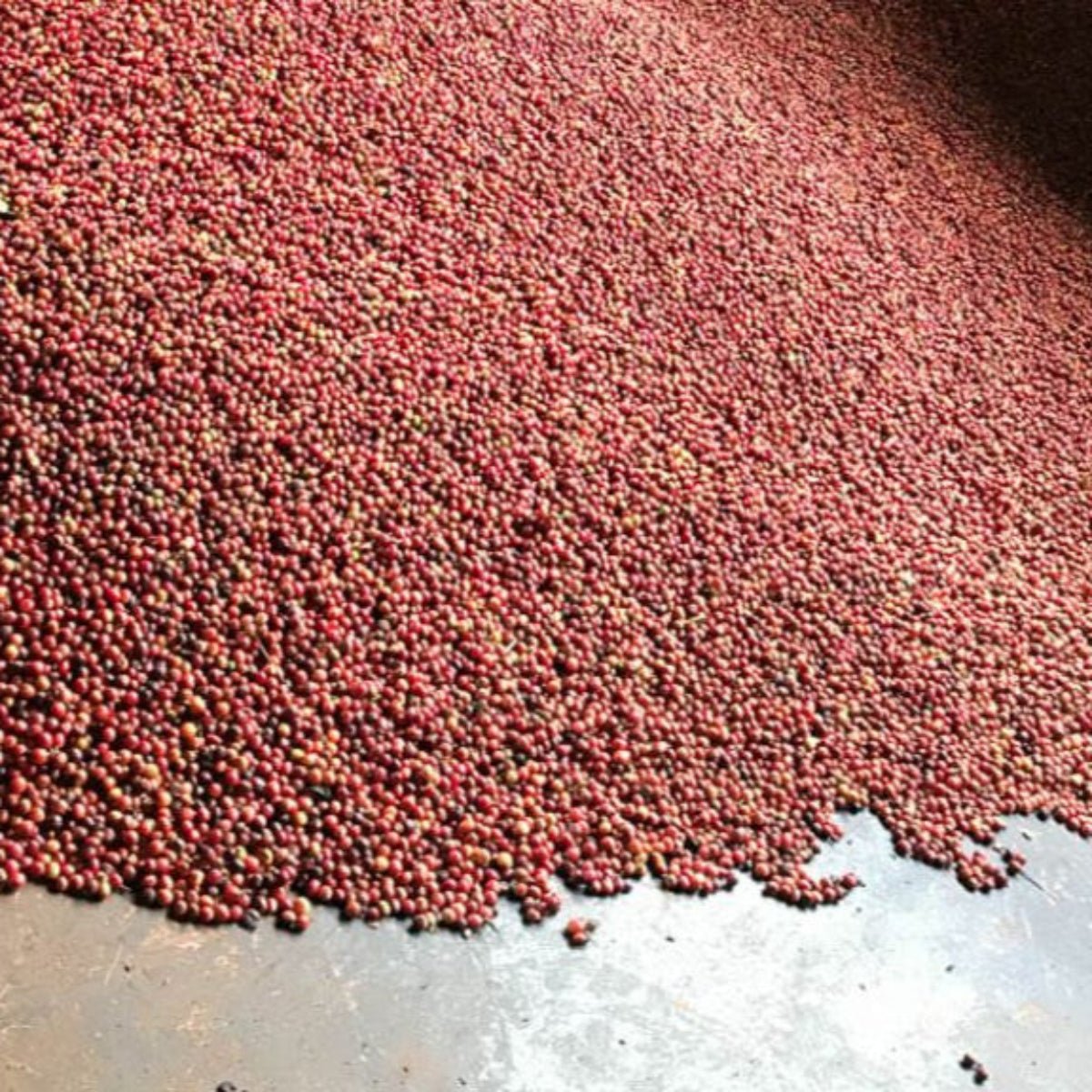
This low-intervention washed coffee comes from Nyeri, Kenya, produced by smallholder members of the Othaya Farmers Cooperative Society and processed at the Rukira washing station. In the cup, it’s sweet, lively, and layered, with notes of peach tea, orange, butterscotch, and a subtle herbal lift reminiscent of rosemary. Compared to many main-crop Kenyas, the acidity is slightly softer and more rounded.
Kenyan coffees are enduring staples for specialty roasters, prized for their clarity, structure, and unmistakable profiles. That appeal is only heightened by their relative scarcity. While Kenya’s primary harvest typically runs from November through January, this coffee comes from the smaller “fly crop” (also known as mitaca), an off-season summer harvest that has historically been overlooked. In recent years, climate shifts, improved varieties, and increasingly precise processing have begun to challenge that bias, making high-quality fly-crop coffees like this one more consistently compelling.
Nyeri sits on the slopes of Mt. Kenya, Africa’s second-highest peak and a defining presence in the country’s Central Province. The mountain rises from a vast protected forest, with surrounding counties extending outward like spokes from its summit. Along the forest’s lower edge—at high elevations with abundant rainfall and mineral-rich volcanic soils—many of Kenya’s most celebrated coffees are grown.
Kenya’s coffee system is largely cooperative-based, with farmers collectively managing processing, milling, and marketing decisions. Othaya Farmers Cooperative Society is one of the region’s larger organizations, encompassing 19 factories and more than 14,000 members across southern Nyeri. Rukira Factory counts around 800 members, roughly 600 of whom actively deliver cherry during harvest. Annual intake averages about 150,000 kilograms, meaning most farmers are producing relatively small volumes—often enough for just a single 30-kilogram bag of exportable green coffee per year.
Despite the challenges inherent in smallholder economics—particularly the many costs and delays between export and farmer payment—Kenya’s quality-based auction system helps reward excellence. Well-positioned counties like Nyeri consistently achieve high prices, and many farmers here, supported by diversified land use and local employment opportunities, are considered comparatively stable within the rural economy.
Kenya is also renowned for its meticulous washed processing. Multiple washing and soaking stages using fresh, cold river water remain the standard, producing exceptionally clean, well-sorted parchment. While water conservation is becoming an increasing concern in drier regions, traditional washing practices continue in central Kenya, supported by ample supply. Final milling and grading by size further refine the coffee, offering roasters consistency, clarity, and a wide range of expressive profiles from a single origin.